
What Is Gesha Coffee — And Why It Costs More
There's a moment that happens when someone tries Gesha for the first time. They take a sip, pause, and look at the cup a little differently. Then they usually say some version of the same thing: that doesn't taste like coffee.
It does, of course. But Gesha has a way of reminding people that coffee is a fruit — that somewhere behind the roast and the grind and the morning routine, there was a cherry on a tree on a mountainside. Few coffees make that connection as vividly as this one.
This September, we're releasing Gesha Monte de Oro, a natural processed Guatemalan Gesha from the Acatenango region — one of two lots arriving together from the same farm, and among the most expensive coffees we've ever put on our shelf. We think it's worth understanding why.
What is Gesha coffee?
Gesha is a coffee cultivar — a specific variety of the Coffea arabica plant, the way Pinot Noir is a specific variety of grape. It traces back to the Gori Gesha forest in southwestern Ethiopia, where it grew wild before being collected and carried, over decades, through research stations in Kenya, Tanzania, and Costa Rica.
For most of the twentieth century, nobody paid it much attention. Gesha plants are tall and gangly, they yield very little fruit, and they're fussy about where they'll grow well. On paper, it was a bad commercial bet.
Then in 2004, a Panamanian farm entered a lot of it in a national competition, and the cupping scores were so far outside the normal range that judges reportedly re-cupped the coffee to make sure the results were real. The price it fetched at auction broke every record on the books. Within a decade, farmers across Central America were planting Gesha, and the specialty coffee world had a new benchmark for what a cup could be.
That's the short version of how a low-yielding, difficult, commercially inconvenient plant became the most sought-after cultivar in coffee.
Gesha or Geisha? Why you'll see it spelled both ways
You'll see this coffee written as both Gesha and Geisha, sometimes on the same shelf. Both refer to the same cultivar.
"Geisha" is the older spelling, and it came from a transcription of the Ethiopian place name as it moved through research records. Because it collides with an unrelated Japanese word, much of the specialty industry has moved toward "Gesha," which sits closer to the original pronunciation and carries no borrowed baggage.
We use Gesha. If you've been searching for Geisha coffee, you're in the right place.
Why is Gesha coffee so expensive?
The honest answer is that the economics are stacked against it at every stage.
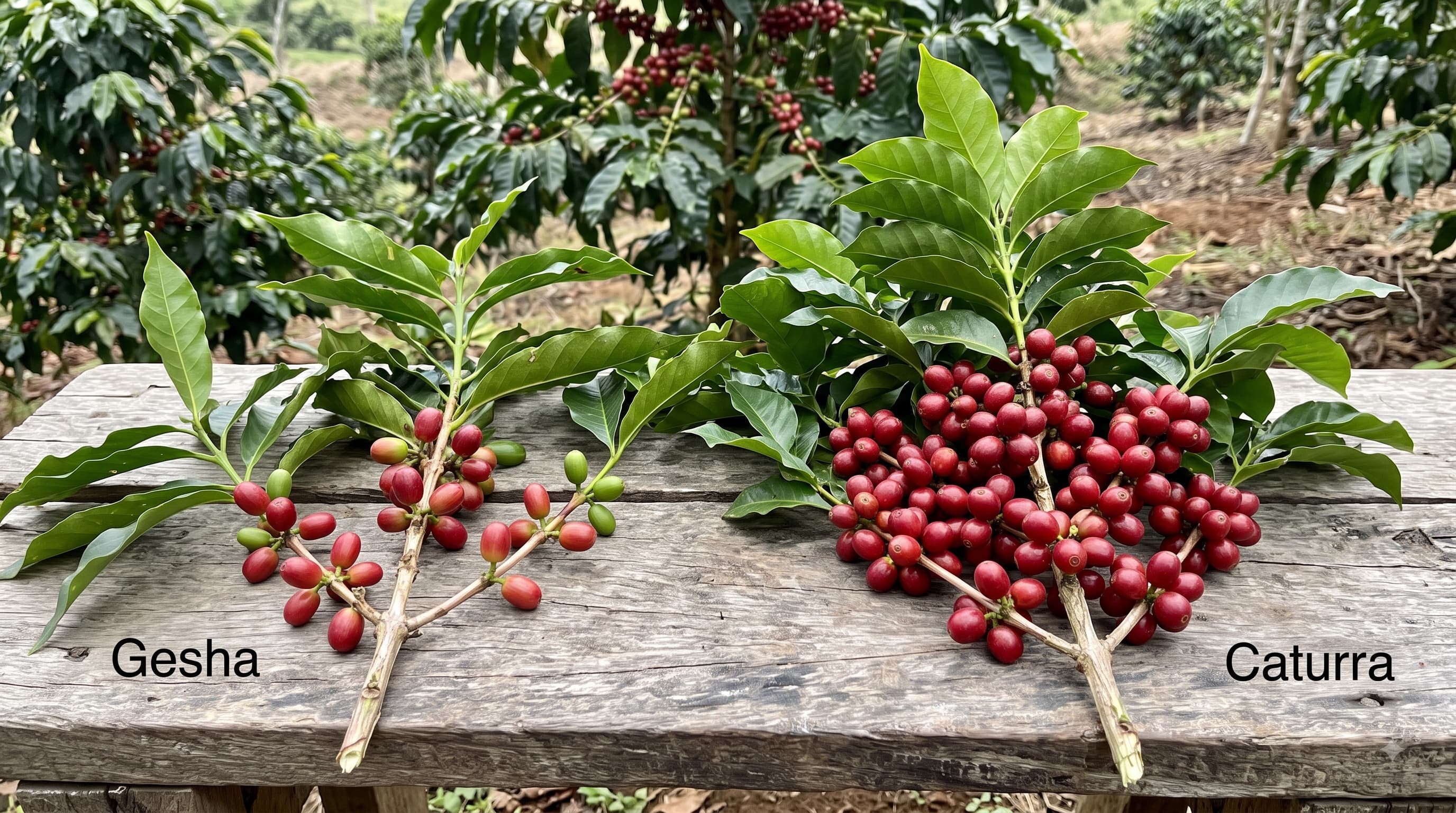
It produces very little. A Gesha tree yields a fraction of what a Caturra or Catuai produces on the same plot of land. A farmer choosing to plant Gesha is accepting substantially less coffee per hectare — and betting that quality will make up the difference.
It's fragile and particular. Gesha needs high elevation and the right microclimate to express what makes it special. Grown in the wrong place, it can be an unremarkable cup from a plant that was expensive to maintain. The trees are also tall, with brittle branches, which makes them vulnerable to wind and difficult to work.
It takes longer to get right. A Gesha tree needs years to reach productive maturity, so a farmer is investing well before any return arrives.
Harvest is uncompromising. Gesha lots are hand-picked selectively — pickers pass through the same trees repeatedly across the season, taking only cherries at peak ripeness. That's slower, more skilled labor than strip-picking, and it's paid accordingly.
And processing is where the risk concentrates. Our Monte de Oro is natural processed, meaning the cherries dry whole with the fruit still on the bean. Done well, natural processing amplifies sweetness and fruit intensity in a way no other method matches. Done poorly, it produces ferment and defect — and there is no salvaging it. Every day of drying is a day the whole lot is exposed.
So when a bag of Gesha costs more, you're not paying a luxury markup. You're paying for a plant that gives less, a harvest that takes longer, and a process where a great deal can go wrong.
Guatemala Gesha: Monte de Oro and the Mountain of Gold

Most of the Gesha you encounter comes from Panama. That's where the cultivar's modern reputation was built, and Panamanian Gesha still sets the auction records.
Ours comes from Guatemala — and we think that's part of what makes it interesting.
Gesha Monte de Oro grows on the Monte de Oro farm — the "Mountain of Gold" — in the Acatenango region, under the care of producer Mario Alarcón and the producer group Guatlabs.
Remember what we said about Gesha being particular: it needs the right place, or it gives you an ordinary cup from an expensive plant. Acatenango is one of those right places. The elevation and the cool nights slow the cherry's maturation to a crawl, and slow maturation is what lets sugars concentrate inside the fruit rather than racing to ripeness. That's the raw material a Gesha needs before anyone touches it.
From there, the natural process takes that concentrated sweetness and doubles down. Every cherry in this lot was picked at peak ripeness and dried whole, fruit still on the bean — the highest-risk, highest-reward path available, and the reason the raspberry in your cup tastes like actual raspberry.
We roast it light, and we roast it slowly. That's the same low-and-slow, small-batch approach we bring to everything on our shelf, but it matters especially here: a Gesha this expressive doesn't need help from the roaster. It needs the roaster to stay out of the way.
What Gesha Monte de Oro tastes like

The first thing you'll notice is raspberry — bright, fresh, almost effervescent — with an exotic lychee sweetness sitting right alongside it. It's a striking opening, and it's the reason people put the cup down and stare at it.
Then let it cool. This is where Gesha earns its reputation.
As the temperature drops, the cup transforms. A silky chocolate foundation rises up underneath the fruit, and the raspberry deepens into black cherry — darker, richer, more luscious. The finish is long and palate-coating, and it lands somewhere very close to strawberry cream. It lingers well past the last sip.
At a glance
- Origin: Monte de Oro farm, Acatenango, Guatemala
- Producer: Mario Alarcón, with Guatlabs
- Process: Natural
- Roast: Light
- Tasting notes: Fresh raspberry, tropical fruit, complex and magical
- Format: 12 oz whole bean — $32
How to brew Gesha coffee at home
Gesha rewards pour over. The slow, controlled extraction gives those delicate floral and fruit notes room to arrive in order rather than all at once. Espresso can work, but the pressure and concentration tend to compress the very complexity you paid for.
Here's the recipe we use, at a 15:1 ratio.
You'll need: V60, filter, gooseneck kettle, scale, timer
- Coffee: 25 grams, ground medium-fine
- Water: 375 grams at 202°F
- Bloom. Pour 50 grams of water over the grounds, making sure everything is saturated. Wait 30 seconds.
- Main pour. Add the remaining 325 grams over the next 2 minutes and 45 seconds, pouring in slow, steady circles.
- Drawdown. Allow about 15 seconds for the bed to drain.
- Total brew time: 3 minutes 30 seconds.
Then — and we mean this — wait. Let the cup sit for two or three minutes before you drink it. Gesha served piping hot gives you maybe half of what it has. The chocolate and black cherry only show up as it cools.
Its sister lot
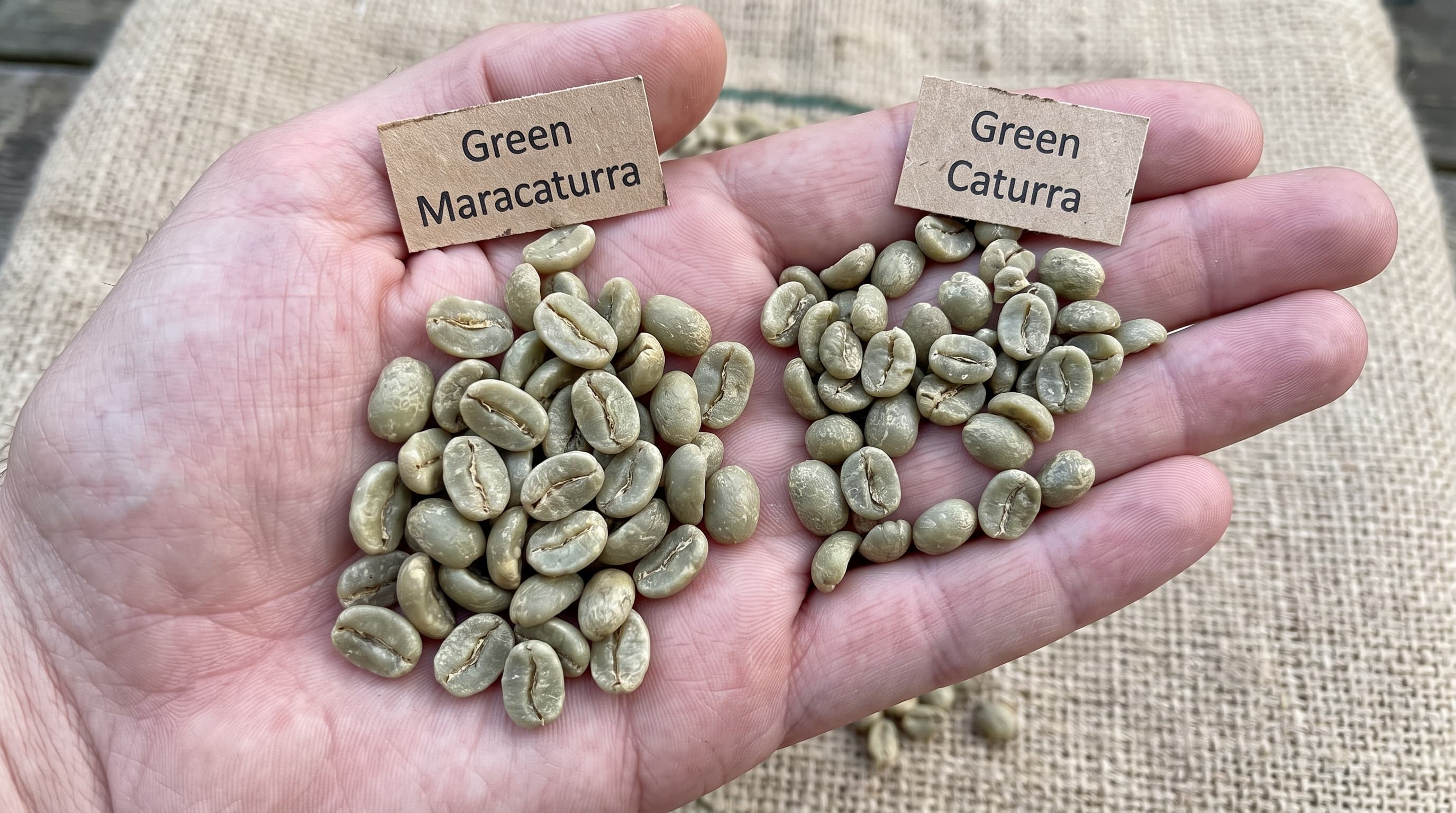
Mario Alarcón sent us two coffees this season, and we couldn't choose between them, so we didn't. Arriving alongside the Gesha is a Maracaturra from Monte de Oro — same farm, same producer, same natural process, and a completely different cup: blood orange, milk chocolate, a floral finish. Same price, too, at $32.
If the Gesha is a lesson in restraint, the Maracaturra is a lesson in problem-solving — it's one of the harder coffees we've had to roast, and we wrote about why.
Where to find them
Gesha Monte de Oro will be available this September at both Lavender Coffee Boutique locations in Denver — Pearl Street and Cherry Hills Village — and online at lavendercb.com.
If you've never had a Gesha, we'd encourage you to have your first one as a pour over at the bar, where you can talk to whoever's brewing it. And if you have had one, you already know why we cleared space on the shelf for this coffee.
Both are small lots. When they're gone, they're gone.
**Disclaimer: The hero image of the Gesha and Carturra plant is AI for illustration purposes generated due to it being post harvest at our coffee cultivars farm and limited resources to capture a real photo.